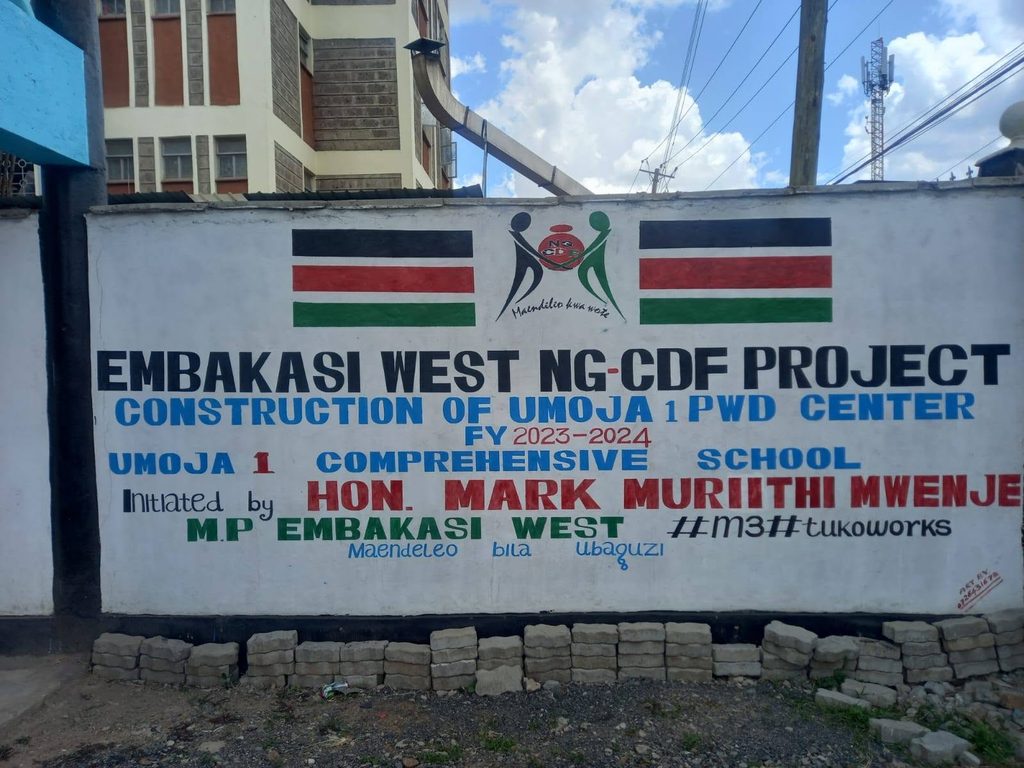
A Persons with Disabilities (PWD) centre in Embakasi West is working to bring therapy, psychosocial support and empowerment services closer to people living with disabilities and their caregivers.
The centre, which was commissioned on 6 November 2025 by Hon. Mark Murithi, was established in response to a gap in access to disability-related services within Embakasi West.
According to Judy, who is in charge of the centre, its role goes beyond providing therapy.
“We want to make sure that we empower them holistically. That is why we are partnering with like-minded organisations to make it happen. We have a lot to do,” Judy said.
The centre is intended to serve as both a therapy and empowerment centre, supporting persons with disabilities through services and activities that respond to their social, economic and personal needs.
The centre has brought together more than 100 young people with disabilities into an empowerment group.
The centre works with people experiencing different forms of disability, including cerebral palsy, autism, spina bifida, hydrocephalus, intellectual disabilities and physical disabilities.
Before the establishment of the centre, many families had to navigate the challenge of accessing services that were not readily available within their immediate community.
The centre therefore seeks to bring these services closer to persons with disabilities while creating an environment where they can access support without having to travel far or face the additional costs associated with seeking services elsewhere.
But according to Bernard Gachanja, one of the staff at the centre, supporting persons with disabilities cannot stop with the individual.
Gachanja, who has experience establishing and working with disability-related centres, advocates for a holistic approach that recognises the wider impact of disability on families and communities.
He noted that caregivers can also experience significant emotional, social and economic pressure when caring for a person with a disability.
A caregiver may be a parent, sibling or another member of the family, and the demands of caregiving can affect their own wellbeing and ability to participate in economic activities.
The centre has therefore incorporated counselling and support for caregivers, including separate support groups for men and women.
Gachanja said his approach has been informed by his experience working in Madagascar and Ethiopia, where he encountered different approaches to supporting families affected by disability.
For him, addressing disability requires looking beyond the individual and understanding the environment around them.
This includes confronting stigma, supporting caregivers, strengthening social connections and creating opportunities for persons with disabilities to participate economically and socially.
The centre has already begun working with partners, including Shofco and Riziki Source, as it continues to develop its empowerment activities.
Beyond therapy and psychosocial support, the centre is also exploring activities that promote social participation.
One such activity is sports.
The centre plans to convene sports activities for persons with disabilities in Embakasi West, responding to what staff describe as a lack of accessible activities for people with disabilities within the constituency.
The initiative reflects a broader question around disability inclusion: what happens when communities create spaces where persons with disabilities can access services, participate, build relationships and develop their capabilities without having to leave their communities?
For the centre, the answer appears to begin with bringing services closer, reducing stigma and recognising that supporting a person with a disability also means supporting the people and systems around them.
The visit highlighted an area that aligns closely with APL’s approach to human capacity development: the need to look beyond the individual and consider the wider environment that shapes people’s ability to create value.
For APL, this means asking not only what support a person needs, but also what opportunities, relationships, skills and systems can enable them to participate meaningfully in society.
As the centre continues to build partnerships with organisations working in disability inclusion, economic empowerment, psychosocial support and community development, the visit opened an opportunity for further conversations between the centre and APL around areas of shared interest.
- Meet Wigan Kemp: The Dandora Artist Championing Men’s Mental Wellness Through Music and Mentorship
- WECYPWD Works to Bring Disability Therapy Closer to Families in Soweto
- SIYB Game Brings Practical Business Learning to 50 Participants in Mukuru
- Embakasi West PWD Centre Brings Therapy, Support and Empowerment Closer to Persons with Disabilities
- “You are the first line of defense against suicide” Experts urge